Packaging Machine Insights & Technical Blog
Technical guides, machine selection analysis, and industry knowledge for flexible packaging automation.
Choosing a Drip Coffee Bag Packing Machine is not just a matter of comparing advertised speeds. Buyers must consider the coffee format, bag materials, sealing method, and production volume. A machine that suits a small roastery may struggle on a larger line.
This guide compares ten options through practical buying questions. Can the machine form consistent bags? Does it handle filter paper and outer packaging? How quickly can operators change settings? These details matter on a real production floor, where a misaligned roll or uneven seal can create costly downtime. Fast output is useful. Reliable output is better.
Packaging engineer Elena Ward is a fictional illustrative expert, not a quoted industry source. Her guiding line for this article is: “A good machine protects the coffee and keeps every pack consistent.” Treat that as a practical principle, not a verified quotation. Buyers should confirm specifications directly with manufacturers and request product trials using their own coffee and packaging materials. Small differences count.
The rankings are a starting point, not a substitute for testing. Some machines may fit one buyer’s needs and miss another’s. Compare actual output, footprint, maintenance access, and available support before deciding. A neat brochure cannot show every production constraint. This guide aims to make those trade-offs easier to spot.
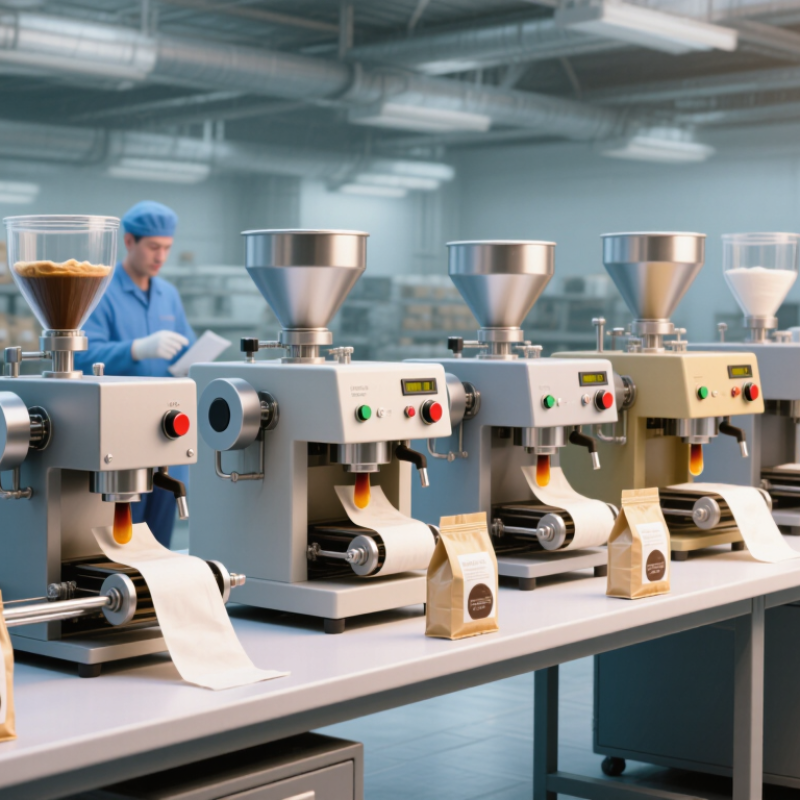
Understanding How Drip Coffee Bag Packing Machines Work
A drip coffee bag packing machine converts roasted, ground coffee into individual hanging filter bags. The process begins with a roll of heat-sealable filter paper. Sensors guide the material through forming rollers. A servo system then controls each feeding movement.
A measured dose of coffee drops into the shaped filter. Typical machines use an auger or volumetric cup for dosing. The filter edges fold around the grounds. Heated sealing jaws close the seams without touching the coffee directly. Another station cuts the bag and attaches the paper wings, string, and tag.
The outer pouch follows a separate path. A second film roll forms each sachet around the finished drip bag. Air removal and heat sealing help protect aroma and reduce leakage. Temperature, pressure, and sealing time must stay balanced. Too much heat can damage the film. Too little heat creates weak seals.
Operators usually adjust speed according to grind size and filter material. Fine coffee may bridge inside the dosing unit. Coarse coffee can produce uneven weights. Small differences matter. A practical buyer should inspect the filling nozzle, sensor response, and cleaning access. Dust often gathers beneath covers and around sealing jaws. If maintenance is difficult, production quality may slowly decline.
Modern machines record dosing errors and sealing faults through a control panel. Still, automatic data cannot replace careful sampling. Workers should weigh bags, inspect seals, and test water flow during each shift. No machine behaves perfectly under every condition. Humidity, coffee freshness, and paper tension can change results. That detail is easy to underestimate.
| Rank | Machine Configuration | Typical Output | Compatible Coffee Bag Format | Typical Fill Range | Filling Method | Sealing Method | Film or Filter Material | Approx. Power Requirement | Recommended Application |
|---|---|---|---|---|---|---|---|---|---|
| 1 | Fully Automatic Drip Coffee Bag Line | 45–65 bags/min | Hanging-ear drip bag with outer envelope | 7–12 g | Auger or servo-controlled volumetric dosing | Heat-sealed inner bag and outer envelope | Heat-sealable nonwoven filter paper; laminated envelope film | Approximately 5–8 kW | High-volume retail production with integrated filter-bag and envelope forming |
| 2 | Servo-Controlled Drip Bag Packing Machine | 35–55 bags/min | Single hanging-ear filter bag | 6–12 g | Servo-driven screw auger with electronic weighing control | Ultrasonic or heat sealing | Nonwoven filter material or heat-sealable filter paper | Approximately 4–7 kW | Accurate dosing for premium and specialty coffee products |
| 3 | Multi-Lane Drip Coffee Bag Packer | 80–140 bags/min | Two or more parallel hanging-ear bags | 7–12 g per bag | Multi-head auger dosing or synchronized volumetric filling | Continuous heat sealing | Heat-sealable filter paper or nonwoven filter fabric | Approximately 8–15 kW | Large-scale production where floor-space efficiency and throughput are priorities |
| 4 | Drip Bag and Outer Envelope Combo Machine | 30–50 complete sets/min | Inner drip bag packed inside a sealed individual envelope | 7–12 g | Auger dosing with automatic envelope insertion | Heat-sealed inner filter bag and three-side or four-side envelope seal | Filter paper; PET/PE, paper/PE, or other laminated barrier film | Approximately 5–9 kW | Retail products requiring aroma protection, hygiene, and longer shelf stability |
| 5 | Compact Automatic Drip Coffee Bag Machine | 20–35 bags/min | Single hanging-ear filter bag | 6–10 g | Intermittent auger dosing | Heat sealing | Heat-sealable filter paper or nonwoven filter material | Approximately 2–5 kW | Small roasters, contract packers, and businesses with limited production space |
| 6 | Premade-Pouch Drip Coffee Packing Machine | 15–30 pouches/min | Premade flat pouch containing a drip filter bag | 8–15 g | Volumetric cup, auger, or net-weigh dosing | Heat-sealed premade pouch | Premade laminated barrier pouch and filter paper | Approximately 2–4 kW | Flexible packaging formats and frequent product changeovers |
| 7 | Intermittent-Motion Drip Bag Packer | 25–45 bags/min | Hanging-ear filter bag with optional outer sachet | 6–12 g | Intermittent auger dosing with programmable filling cycles | Impulse or constant heat sealing | Nonwoven filter paper and laminated heat-sealable film | Approximately 3–6 kW | Medium-speed production requiring controlled sealing and simple operation |
| 8 | Ultrasonic-Sealing Drip Coffee Machine | 30–50 bags/min | Hanging-ear filter bag | 6–12 g | Servo auger or load-cell-assisted dosing | Ultrasonic sealing for selected compatible filter materials | Ultrasonic-compatible nonwoven filter material | Approximately 4–8 kW | Applications seeking clean seals, reduced thermal exposure, and consistent edges |
| 9 | Gas-Flushing Drip Coffee Bag System | 20–40 complete sets/min | Drip bag packed in a gas-flushed outer envelope | 7–12 g | Auger dosing with nitrogen-flush option | Heat-sealed inner bag and gas-tight outer envelope | Approximately 5–10 kW, plus nitrogen supply | Roasted coffee products needing improved protection against oxygen and aroma loss | |
| 10 | Semi-Automatic Drip Coffee Bag Packing Station | 8–20 bags/min | Filter bag or premade outer sachet | 6–15 g | Manual loading with timed auger or bench-top dosing | Bench-top heat sealing | Filter paper, nonwoven material, and premade laminated pouches | Approximately 1–3 kW | Sampling, pilot production, seasonal products, and low-volume specialty coffee |
FAQS
It turns ground coffee and filter paper into individual hanging bags. An outer pouch can protect each finished bag.
Machines commonly use an auger or volumetric cup. Fine grounds may bridge, while coarse grounds can produce uneven weights.
Heated jaws close the folded edges without touching the coffee. Heat, pressure, and sealing time need careful adjustment.
Continuous-motion systems can produce more bags, but need steady material feeding. Intermittent systems pause for filling and sealing.
Use your own coffee and filter paper. Weigh bags, inspect seals, check thread placement, and count rejects.
It helps limit moisture exposure and aroma loss. Some systems also remove air or use nitrogen flushing.
A range of 30 to 60 bags per minute may fit some growing operations. The right speed depends on daily orders and stable filling.
No. Dust can affect sensors, and grind size or humidity can change results. Manual checks still matter.
Coffee dust gathers beneath covers and near sealing jaws. If those areas are hard to reach, quality may gradually decline.
Conclusion
This guide to the Top 10 Drip Coffee Bag Packing Machines explains how these systems fill, seal, and package ground coffee into convenient filter bags while maintaining freshness and consistent portion control. It introduces the main machine types, including semi-automatic and fully automatic models, and describes their functions, such as weighing, inner-bag forming, outer-envelope sealing, date coding, and finished-product collection. Understanding these processes helps buyers match machine features with their specific production goals.
The comparison focuses on capacity, packaging quality, operating stability, automation level, and ease of maintenance. It also considers how accurately each Drip Coffee Bag Packing Machine handles different coffee volumes and packaging materials. Finally, the guide offers practical advice for selecting equipment according to budget, available workspace, labor requirements, and expected output. By balancing initial investment with long-term efficiency, buyers can choose a reliable solution that supports consistent quality and sustainable production growth.